
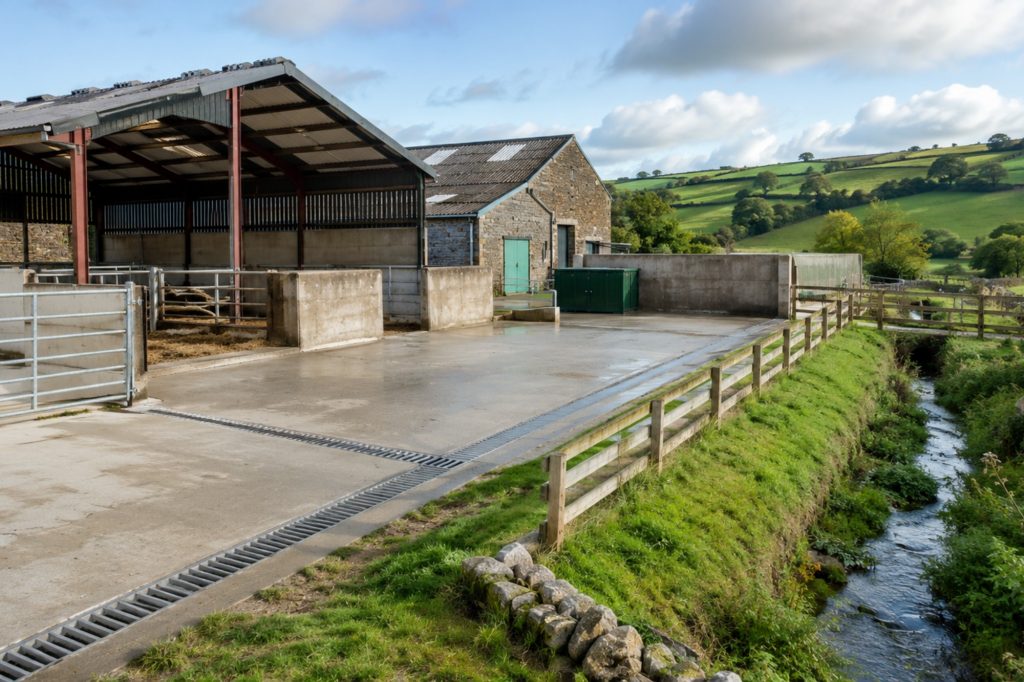
Across the UK, many farms are taking proactive steps to improve environmental performance, reduce pollution risk and secure long-term compliance with evolving agricultural regulations. Ethical Planning are supporting farms to meet those environmental standards.
These improvements are often prompted by Environment Agency or Catchment Sensitive Farming inspections, which may identify issues relating to dirty water management, runoff, nutrient pollution or ageing yard infrastructure. While these requirements can feel challenging at first, they also present an opportunity to invest in practical improvements that support both environmental protection and the long-term resilience of rural businesses.
Common Environmental Challenges on Farms
Farm inspections can identify a range of issues, including runoff from uncovered feeding or livestock areas entering nearby ditches or drains, waterlogged yard surfaces contributing to sediment and nutrient loss, or manure and slurry management systems that no longer meet current standards.
For many farms, these challenges are made more complex by the location of the farmstead. Sites may include listed buildings, traditional stone barns, sensitive rural landscapes or nearby protected habitats and watercourses. In these cases, any infrastructure improvements must be carefully planned to ensure they address environmental requirements without causing harm to heritage, ecology or landscape character.
Practical Infrastructure Improvements
Targeted works can make a significant difference. Roofing over livestock or manure areas can prevent rainwater from mixing with dirty water, while renewed concrete yard surfaces and improved drainage layouts can help control runoff more effectively. Other measures, such as sediment traps, fencing near watercourses and improved manure storage, can further reduce pollution risk and support regulatory compliance.
These interventions are not only about meeting minimum standards. Cleaner yards, better drainage and covered working areas can improve day-to-day farm operations, reduce maintenance issues and help farms adapt to heavier rainfall and changing weather patterns.
Funding and Catchment Sensitive Farming
The Catchment Sensitive Farming programme, delivered by Natural England in partnership with the Environment Agency, can provide specialist advice and access to Countryside Stewardship capital grants. These grants can support eligible works such as roofing, concrete yard renewal, sediment management and watercourse protection.
However, funding approval and planning permission are separate considerations. Even where works are grant-supported, they may still require planning consent, particularly where new structures are proposed or where the site is environmentally or historically sensitive.
Why Early Planning Advice Matters?
Early planning advice can help confirm the correct consenting route, identify potential constraints and ensure that proposals are properly evidenced before significant time or cost is committed.
At Ethical Planning, we support farmers and landowners by reviewing planning and environmental constraints, advising on application strategy, coordinating with specialist consultants and liaising with local authorities, Natural England and the Environment Agency where required.
Building Resilience for the Future
Environmental infrastructure improvements can help farms operate more efficiently, protect nearby watercourses and biodiversity, and strengthen resilience for the future.
If your farm has been advised to undertake improvements following an Environment Agency inspection or Catchment Sensitive Farming visit, Ethical Planning can help guide you from early feasibility through to planning approval and delivery.